

Change Direction, Change Control
Inform and involve. Share responsibility. Support careers.


Whatever stage of their working lives, people are concerned about surviving current storms and future turbulence. Expectations are shaken and ambitions in review. Workers are weighing corporate leaders’ commentary against uncharted potential that offers more control. Sufficient stability, upskilling, and career growth are essential to engage Millennials and Gen Zs in a corporate future.
“Corporate stability is dead. In 2026, financial control is the new job security.” — WeAreFounders article ‘The 2026 Founder Urgency Index: Why Millennials and Gen Z are Rushing to Launch‘ January 2026.
Concern, Competition, Control
What are YOUR ambitions for your working life? How will you achieve them? Perhaps you’ve reined them in temporarily or dampened expectations, parallel-tracked them OR you’re exploring a new trajectory altogether? You’re not alone.
Since predictable, or even projectable, jobs and careers are over, everyone is assessing the now, near, and possible, often starting with ‘how do I keep my job?’ ‘how can I stay competitive?’ and ‘how/when can I launch a new venture?’
Elevated fears about AI-related job losses easily increase corporate workers’ internal competition, reducing collaboration, and undermining AI integration.
Meantime, AI’s enhanced capabilities to power more scaleable entrepreneurial opportunities are resonating with early career professionals experiencing job rejections and internal resistance. These possibilities also attract concerned middle managers and rising leaders, disheartened by corporate mercuriality, anticipated structural organisation changes, lack of AI coherent strategies, paltry investment in people, and nominal autonomy over their work and lives.
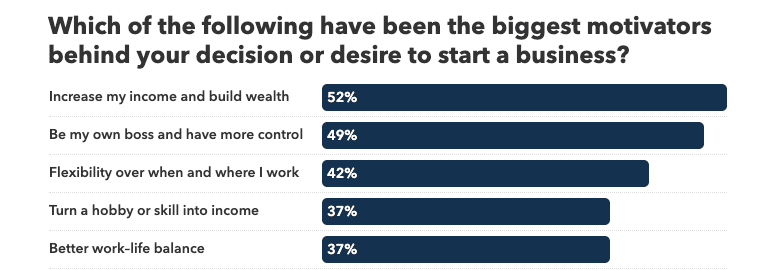
Employees advancing through working life phases have many evolving growth objectives and approaches. With AI infusions and ever-increasing job and career choices, all workers MUST reflect and self-direct to achieve financial stability AND achieve their ambitions. Will your team members quit to do that?
“The ‘Why’ has shifted. It is less about ‘being the next unicorn’ and more about ‘not being at the mercy of a HR department.’” — WeAreFounders (UK) article ‘The 2026 Founder Urgency Index: Why Millennials and Gen Z are Rushing to Launch‘ Jan, 2026.
How are you recognising and channeling employees’ careers and ambitions?
Flipped Risk
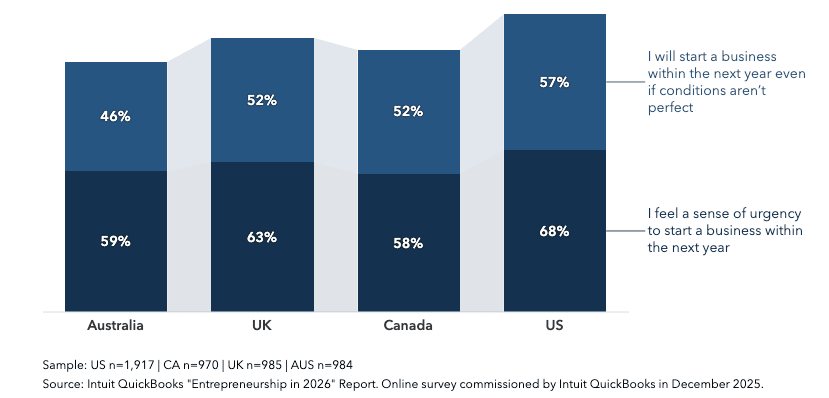
Corporate jobs are now seen as risky. AI-related uncertainties have traditional jobs comparing less favourably to new entrepreneurial potential, activating new ambitions for employees. “Urgency” is driving 30% of UK adults (up 100%from 2025) and 33% of US adults (up 94%) plans to start businesses in 2026:
#1 strategy for wealth-building is entrepreneurship in 2026 in US, UK, Australia, and Canada, vs. saving cash, investing or traditional raises.
38% of respondents now believe starting a business is a better path to building wealth than climbing the corporate ladder (27%).
66% of US adults plan to or are considering starting a business or side hustle in 2026, up from 52% last year.
74% of Millennials feel urgent pressure to launch a business.
43% of Gen Zs have high entrepreneurial intent [Quickbooks ‘Entrepreneurship in 2026’ report, survey conducted December 2025].
69% y-o-y increase in “Founder” added to in UK LinkedIn profiles.
Side hustles have rising importance still helping make ends meet and turning creativity into income, but also now as the seed stages of bigger ambitions which also enable positive ways to change working life dynamics:
46% of UK adults have a side hustle, 45% hope to grow it into a full-time business, while all consider multiple income streams necessary.
47% of US adults earned side hustle income in 2025, yet only 20%registered their business increasing informal entrepreneurial economy.
63% of Gen Z and 58% of millennial women in the UK have considered running their own business to earn more money, achieve better work-life balance or pursue their passion [Mastercard research 2025].
Are you supportive of your team members’ side hustles (so they don’t leave)?
Risk vs. Growth
The engine of your business success depends on those with greatest capacity to embrace evolving market developments, operations, work dynamics and technologies. Using broad age groups to signify life arc phase PLUS digital upbringing, Millennials and Gen Z are key to emphasise and orientate around, while adjusting for Gen X and Boomer needs and beneficial experiences.
Changing conditions are anticipating employment flux globally in 2026:
20% of employees globally plan to resign with the next year, including
24% of UK workers (up 1%), 25% of Germans, only 9% of US workers.
41% of worldwide employees cite career growth as reason #1 to quit.
28% Millennials, 25% Gen X, 24% Gen Z cite career advancement as their #1 reason [Culture Amp, data from 97 million surveys, Dec 2025].
Benefits versus risks of corporate employment have shifted as employees seek to survive and stabilise such as assessing any RTO mandate, leaders’ approach to layoffs, real or perceived AI job risks, work culture, and received training.
Engaging workers now requires improving their job risk profile - developing their skills, involving them in human-AI team integration, actively supporting their professional development and skills for self-managed career advancement.
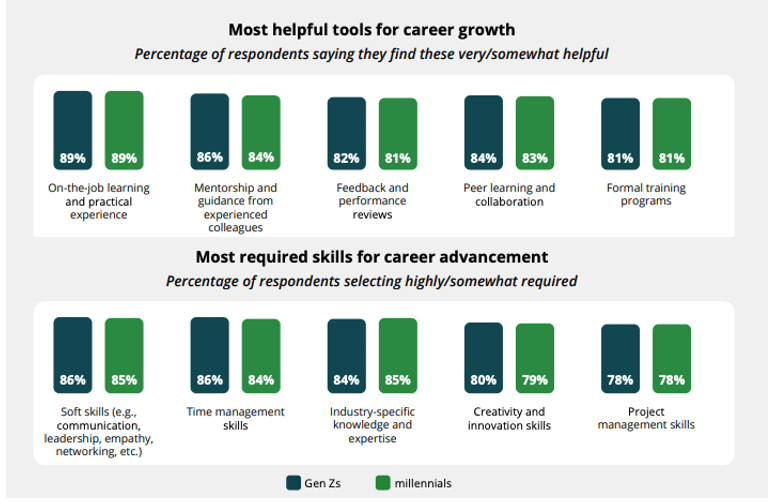
With 53% of folks in their early 60s still in paid work [UCL], are Boomer and Gen X leaders delayed retirements blocking Millennial progress? Have you considered the alternative career plans of your rising leaders?
Which Millennials primed to leave or being encouraged to stay with more responsibility and flexibility? Do they have inputs about how AI is used so they can grow well-integrated human-AI teams? Is your company investing in early career team members? Have you checked for gaps in lived experiences?
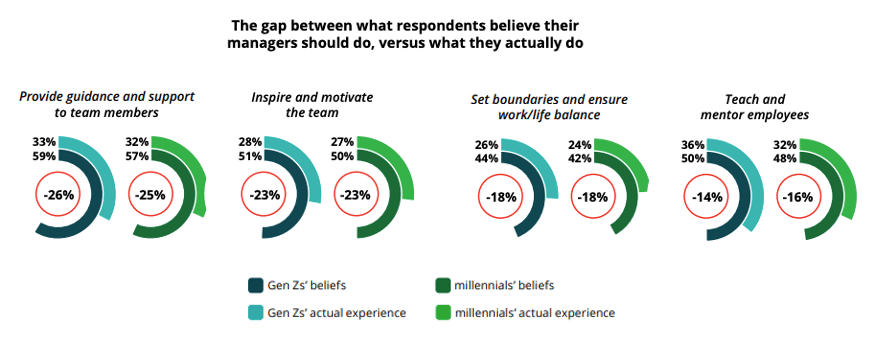
The “job-hugging” most common in the US may be masking the realities of workers’ evolving mindsets and expected moves. As CEOs AI-layoff claims increase (even if the data STILL shows little real impact, for now) and low trust drops further, proactive steps are required and self-interest equals survival.
“Many organisations still treat mobility as a luxury, rather than a retention strategy. If we want people to stay, we need to make growth feel real, even when promotions are tight.”“Leaders who can stabilise workloads, create clarity and pathways for growth will come out on top in 2026.” Justin Angsuwat, Chief People Officer at Culture Amp.
Tune into what your team is going through to engage and retain them.
News & Muse
📹 Why Gen Z Graduates are in Crisis - realities changing aims and ambitions.
📘 The Squiggly Career, Ditch the Ladder, Discover Opportunity, Design Your Career by Helen Tupper and Sarah Ellis.
🗞️ Generations at Work 2026: prepare for peak overlap - employment in flux.
🎶 Bonfire of the Millennials, Annisokay - great tunes, strong lyrics.
Change the new paradox of ‘entrepreneurial stability’ versus corporate risk to improve Millennial and Gen Z engagement and retention. Offer more innovative opportunities to younger talent, decentralise control, enable involvement in creative human-AI teamwork, provide paths to bypass Boomer bottlenecks, and reward ownership in outcomes.
Would you like to assess workforce mindsets and potential movements? Could you benefit from brainstorming more solutions to cultivate millennial and Gen Z ambitions internally? Click here to book a 45-minute session.
See you next week.
Sophie